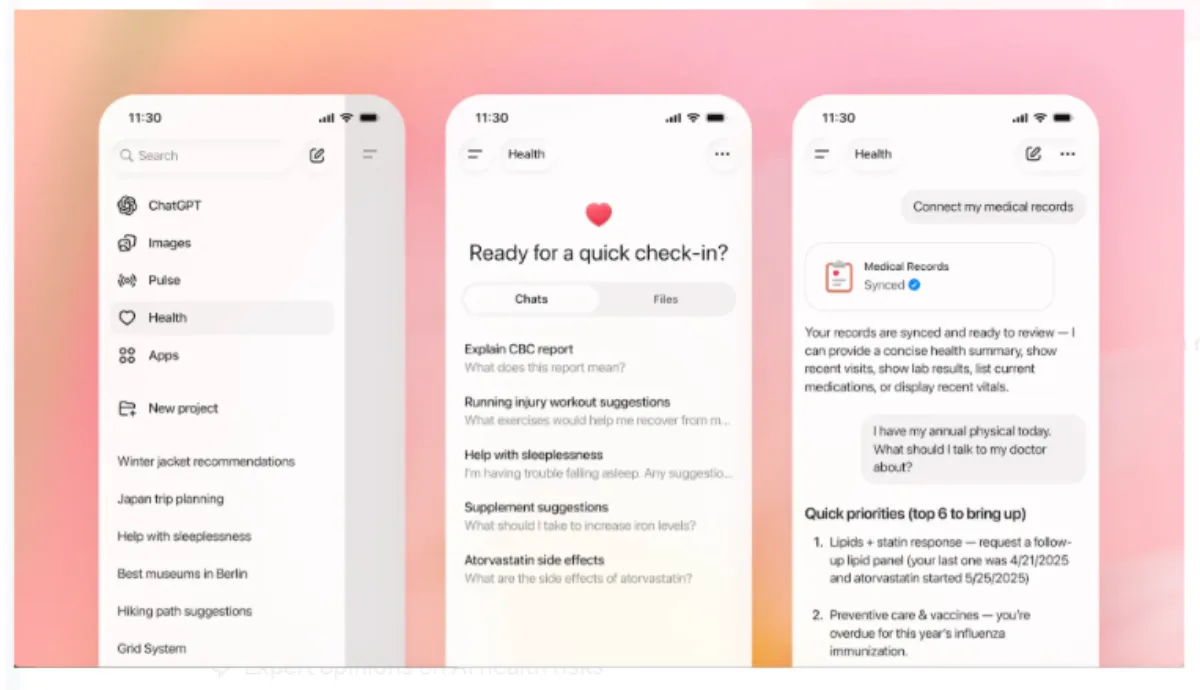

OpenAI rolled out ChatGPT Health on January 7, 2026. This new feature creates a separate space inside ChatGPT for health and wellness talks. Users can securely link medical records and fitness apps to get advice tailored to their own data. The company says it helps people feel more in control of their health without replacing doctors.
The idea came from how many already use ChatGPT for health questions. OpenAI looked at anonymized data and found over 230 million people ask about health or wellness each week. Information often sits scattered in different apps or paper files.
ChatGPT Health aims to pull it together in one private spot. Responses become more useful when based on personal details like lab results or daily steps.
Privacy stands out as a big focus. Health chats stay isolated from regular conversations. OpenAI uses extra encryption for this section. Data does not train the company’s AI models.
Users control what connects and can delete memories anytime. The company worked with doctors to design it. They stress it supports care, not diagnoses or treatments.
Connecting data is straightforward for those in supported areas. In the US, medical records link through a partner called b.well. That covers records from many providers. Wellness apps include Apple Health for iPhone users, MyFitnessPal for tracking food, and Function for broader health metrics.
Apple Health pulls in activity, sleep, heart rate, and more from phones or watches. MyFitnessPal adds diet logs. Once linked, ChatGPT can spot patterns. It might explain why energy dips after certain meals or suggest questions for a doctor based on recent tests.
Examples shared by OpenAI show practical uses. Someone uploads blood work and asks what the numbers mean in simple terms. Or connects fitness data to plan better workouts around sleep patterns. It can help compare insurance plans using past visits. Preparing for appointments becomes easier with summaries of symptoms or history.
Access starts limited. Early users get in first, with a waitlist open for others. It works on web and iOS right away. Android support comes soon. Medical record links only function in the US for now. The feature skips the UK, European Economic Area, and Switzerland due to stricter data rules there.
OpenAI also announced tools for healthcare professionals that same week. Called OpenAI for Healthcare, it helps hospitals and clinics with tasks like drafting notes or reviewing evidence. Some big names like Boston Children’s Hospital and Cedars-Sinai started using it. That version follows HIPAA rules for patient data.
Reactions came mixed. Many welcomed the convenience. People often search symptoms online anyway. Having a secure spot with personal data could cut confusion. Doctors involved in testing said it empowers patients to ask better questions.
Privacy groups raised flags. Even with promises, sharing sensitive records worries some. AI can make mistakes or hallucinate facts. Health advice gone wrong carries risks. Campaigners want clear limits on how data gets handled. Regulators watch closely as AI enters medical spaces.
The launch fits a trend. Tech companies push into health. Google has tools for searching symptoms. Apple expands Health app features. Amazon owns clinics and pharmacy services. OpenAI enters with its strength in chat interfaces. ChatGPT already handles complex explanations well.
For everyday users, ChatGPT Health feels like an upgrade. Free plan holders get it, along with paid ones. No extra cost mentioned yet. Switching to the Health tab prompts automatically for health topics in regular chats.
Broader questions linger. Will insurers or employers access this data somehow? OpenAI says no, everything stays user-controlled. How accurate will advice stay over time? The company plans updates based on feedback.
Doctors remind patients to verify AI suggestions with professionals. ChatGPT Health includes disclaimers about not being medical care.
In Africa and other places outside initial rollout, users wait longer. Some features like Apple Health work globally, but full medical links tie to US systems.
This step shows AI moving deeper into personal life. Health joins work, creativity, and education as areas ChatGPT touches. For many, it offers help navigating complicated systems. Others prefer caution with private info.
OpenAI says more connections and countries come later. Early feedback will shape changes. The feature starts small but could grow fast given ChatGPT’s reach.
As more try it, real experiences will show strengths and limits. For now, ChatGPT Health marks another way AI assists daily decisions.