

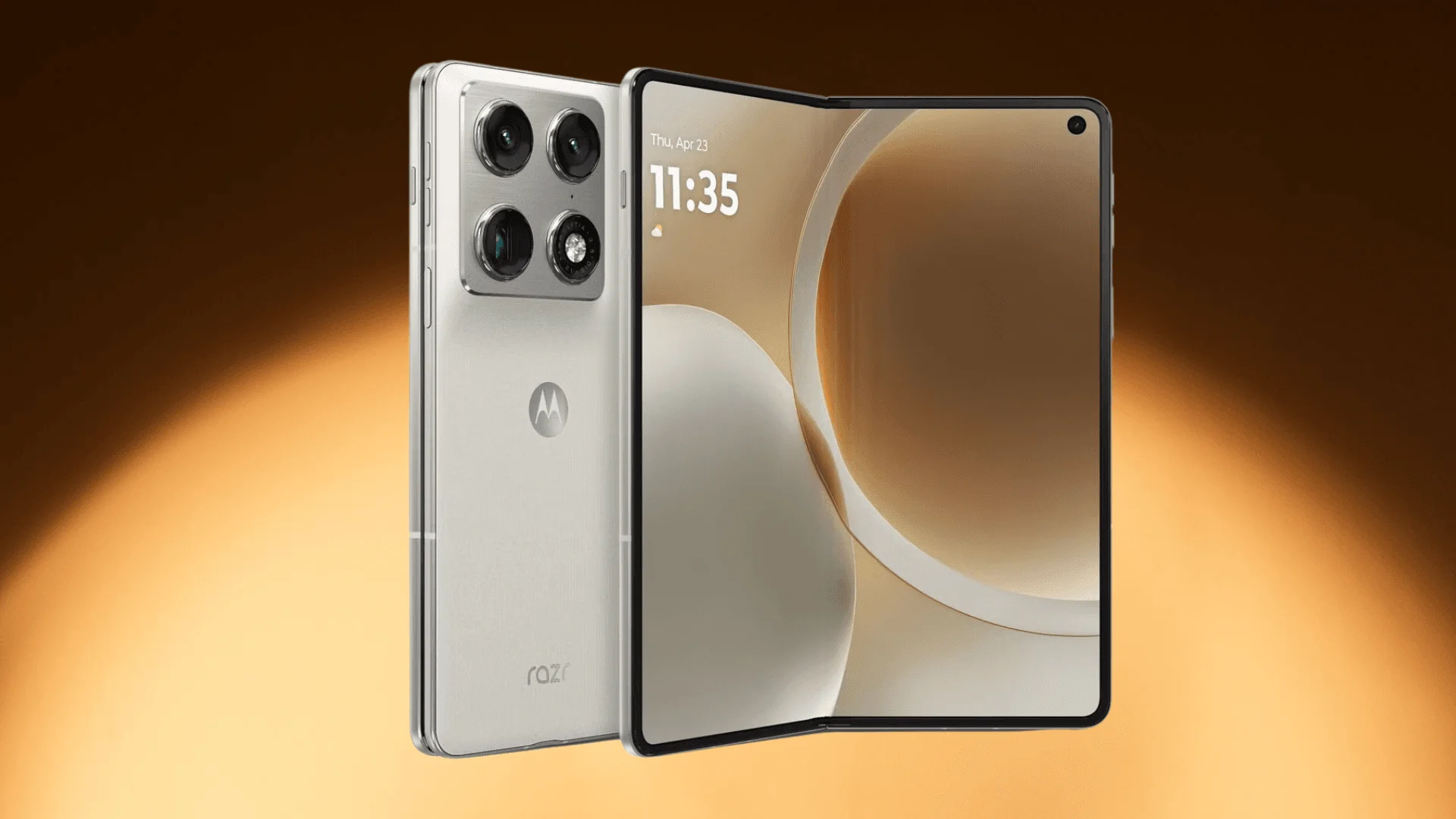
Motorola unveiled the Razr Fold at CES 2026, marking the company’s first entry into book-style foldable phones with a focus on everyday use rather than just the flip-phone nostalgia of past Razr models. The announcement came during Lenovo Tech World, held alongside CES in Las Vegas this week.
Lenovo owns Motorola, and the event highlighted new devices across the brand. The Razr Fold stands out as Motorola steps away from its familiar clamshell design to compete directly with phones like Samsung’s Galaxy Z Fold series and Google’s Pixel Fold.
Attendees at the Sphere venue in Las Vegas got the first look on January 6. Motorola executives took the stage to show off the phone in person. Closed, it works like a regular slab phone with a big cover screen.
Open it, and you get a tablet-like experience for work or entertainment. This shift makes sense after years of perfecting flip foldables. The market for book-style devices has grown, and Motorola wants a piece of it.
The design starts with the outside. The Razr Fold has a 6.6-inch external display, larger than what you see on most competitors when closed. That means you can handle texts, emails, or social media without unfolding it every time. The screen uses pOLED technology for bright colours and deep blacks. It supports high refresh rates up to 144 Hz for smooth scrolling.
When you flip it open, the inner screen measures 8.1 inches diagonally, with a 2K resolution and LTPO tech that adjusts refresh rates to save battery. The crease in the middle is there, but Motorola says it’s less noticeable than before, thanks to improved hinge engineering.
The hinge itself allows the phone to open flat or stay at angles for things like video calls or watching content hands-free. It’s rated for hundreds of thousands of folds, similar to other premium foldables.
The frame is aluminium, with Gorilla Glass on the outside and a plastic film over the inner flexible screen. It comes in a few colours, though exact options aren’t all shown yet. Weight sits around 280 grams, which feels hefty but balanced when open.
Under the hood, Motorola went with top-tier parts. It runs on the latest Qualcomm Snapdragon processor, likely the 8 Elite series announced late last year. That chip handles heavy tasks like gaming or editing photos without slowdowns.
RAM starts at 12GB, with storage options up to 1TB. Battery capacity combines two cells for a total around 4,800 mAh, supporting fast wired and wireless charging too. Motorola claims a full day of mixed use, even with both screens active.
One big push this time is on-device AI. Motorola introduced Qira, a new platform that ties together features across its phones and Lenovo computers. Things like Catch Me Up pull in notifications, calendar events, and messages to give quick summaries.
Next Move suggests actions based on what you’re doing, like replying to an email or navigating to a meeting. These run locally for privacy, without always sending data to the cloud. The large inner screen makes multitasking easier, with up to three split apps or more floating windows.
The camera setup looks strong on paper. The rear has three 50-megapixel sensors: a main one with a Sony Lytia chip, an ultrawide, and a periscope telephoto for zoom. It supports Dolby Vision video recording and advanced stabilisation for steady shots while moving.
Selfies use separate cameras—one on the cover screen and one inside—so you get good quality no matter how you hold it. Motorola tuned the software for natural colours, not over-the-top saturation like some brands.
Stylus support adds a productivity angle. Motorola showed a new pen that works on the big inner screen for notes, drawing, or precise edits. It’s optional and sold separately, but it positions the Razr Fold as a mini laptop replacement for some users. Open it on a table, prop it up, and jot ideas during meetings. This feature borrows from Samsung’s S Pen but fits Motorola’s cleaner software approach.
They also revealed a special edition tied to the FIFA World Cup 2026. Hosted across the U.S., Mexico, and Canada, the tournament gets custom branding on a Razr version. It includes unique wallpapers, themes, and maybe exclusive content for fans. Details are light, but it’s a smart marketing move to tie the brand to a global event.
Pricing hasn’t been set yet. Motorola said more info on cost and exact release dates comes later this year, likely summer or fall. Past Razr models started around $1,000 for flips, so expect the Fold to land higher, maybe $1,800 or more to match competitors. Availability will start in key markets like the U.S., Europe, and parts of Asia.
This launch fits broader trends in foldables. Shipments grew a lot in 2025, with book-style leading over flips in some regions. Samsung still dominates, but Google and OnePlus made gains with refined designs. Motorola’s entry brings fresh competition, especially if it undercuts on price or emphasises practical features. Analysts note the large cover screen as a standout—many complain about tiny outer displays on rivals that force constant opening.
Hands-on reports from CES describe a premium feel. The phone doesn’t creak when folded, and the screens light up fast. Typing on the outer keyboard works well for quick replies. Gaming on the big screen immerses you, with heat managed decently. Some testers worried about durability, a common foldable concern, but Motorola offers good warranty coverage.
Compared to the Galaxy Z Fold7, rumoured for later 2026, the Razr Fold has a bigger cover screen but a similar inner size. Google’s Pixel Fold line focuses on software integration, while Motorola keeps things simple with near-stock Android and long update promises. OnePlus Open impressed last year with fast charging; Motorola matches that but adds the stylus twist.
Motorola’s Razr history goes back to the iconic flip phone of the 2000s. They revived it in 2019 as a foldable, sticking to vertical flips ever since.
Models improved hinges, dust resistance, and cameras over generations. This book-style move diversifies the lineup without abandoning flips. They showed updated Razr flips too, keeping options open.
The AI push ties into Lenovo’s bigger picture. At Tech World, they demoed how Qira works across phones, tablets, and PCs. For example, start a note on the Razr Fold and pick it up on a Lenovo laptop seamlessly. It’s an ecosystem play in a market where Apple and Samsung already connect devices well.
Consumer reactions online mix excitement and caution. Foldables appeal to early adopters, but high prices and fragility keep mainstream buyers away. Posts on forums praise the productivity angle—people who travel or work remotely see value in the large screen without carrying a tablet. Others wait for reviews on real-world battery and crease visibility.
In the U.S., where CES draws crowds, the Razr Fold got booth traffic. Demo units let people try unfolding and apps. Staff highlighted water resistance, rated IPX8 for submersion. Dust protection is lower than some rivals, a trade-off for the hinge design.
For buyers, it boils down to needs. If you want pocketable with an occasional big screen, flips suffice. For heavy multitasking, the Razr Fold makes a case. The stylus and AI tools target creators or professionals on the go.
Motorola also teased other gear at the event, like new earbuds and watches, but the Razr Fold stole the show. The FIFA edition adds fun for sports fans, with potential AR features for matches.
As details firm up, expect more hands-on and benchmarks. For now, the unveiling puts Motorola on the map for serious foldables. It’s a bold step from flip nostalgia to versatile daily driver.
The phone runs Android 16 out of the box, with Motorola’s light skin adding useful gestures. Security includes under-display fingerprint on both screens. Audio comes from stereo speakers tuned for Dolby Atmos.
Battery tests in early previews show decent life, better when using the outer screen mostly. Charging hits 65W wired, full in under an hour.
Camera samples shared by media look sharp in good light, with natural skin tones. Low-light performance benefits from the big sensor. Video stabilisation shines for vlogs or action clips.
Software updates promise five years, matching industry leaders. That reassures buyers spending big. In stores, expect demos beside Samsung displays. Carriers like Verizon or AT&T will push bundles.
Globally, rollout varies by region. Europe gets it first after the U.S., with Asia following.
This launch reflects Lenovo’s investment in Motorola. After buying the brand from Google years ago, they’ve rebuilt it steadily. Foldables are still niche but growing. Prices coming down helps. Motorola aiming for practical could win converts tired of gimmicks.
The Razr Fold feels like a mature take. No over-the-top claims, just solid hardware for real use. Fans of the old Razr might miss the flip charm, but this opens new doors. Motorola balances heritage with forward thinking.
As CES wraps, the buzz continues online. Videos of the hinge in action rack views. People debate if it’s the foldable to beat this year. For anyone shopping for premium phones, add it to the list. Wait for full reviews, but the unveiling impresses. Motorola proves it’s not just riding nostalgia. The Razr Fold shows ambition in a crowded field.